
Storm & insurance
Storm Damage Roof Repair
Make sure everyone is safe and contain any water. Then, before you call your insurance company, get a free inspection: we tell you whether a claim makes sense, and if it does, we meet your adjuster and guide you through each step.
4.9900+ Google reviewsNo interest if paid in full within 18 months¹
Schedule a free storm inspection
We will inspect the damage and tell you honestly whether a claim makes sense, a repair is enough, or nothing is needed at all.
After a storm
What to do after a storm
Make sure everyone is safe
Nothing else comes first.
Contain any water
Place a bucket under active leaks and use towels to limit damage to your home’s interior.
Check your property carefully
Hail is often accompanied by strong wind, which can bring down limbs and scatter debris.
Call us to tarp it
No one should be on a wet roof. As soon as the weather passes and the roof is safe, we send a team to find the damage and tarp it, and you get an invoice to submit with your claim.
What storm damage looks like
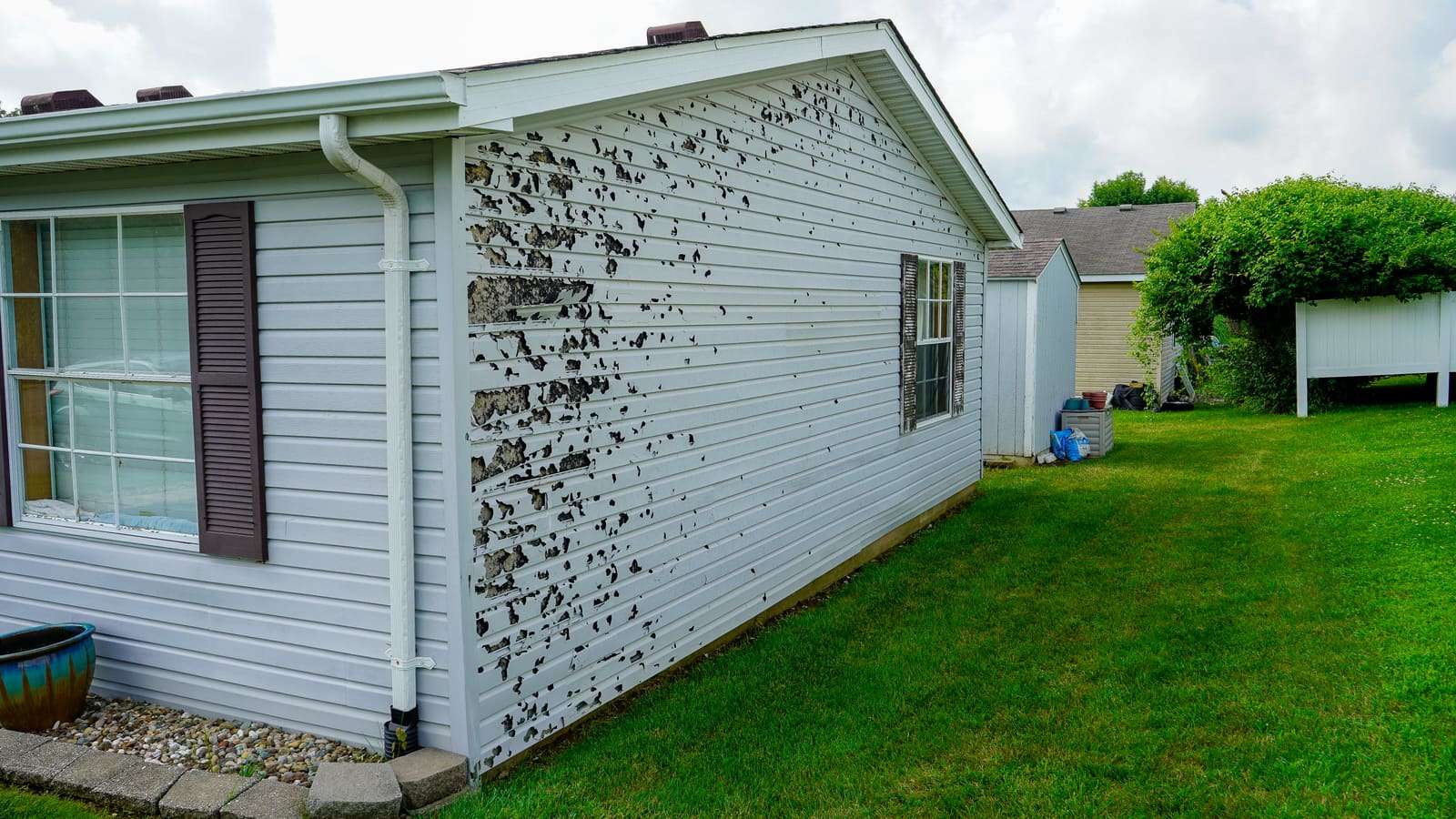
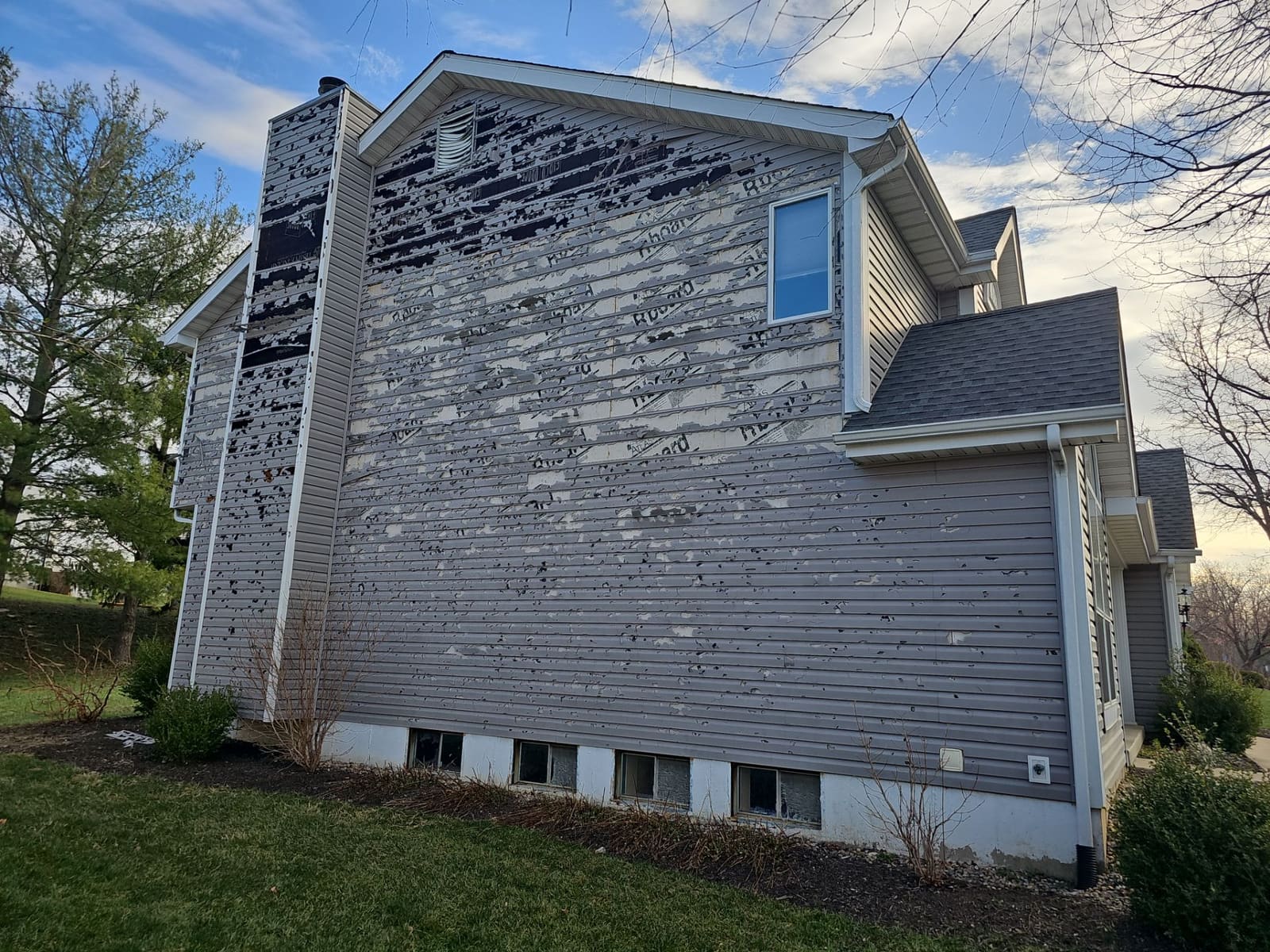
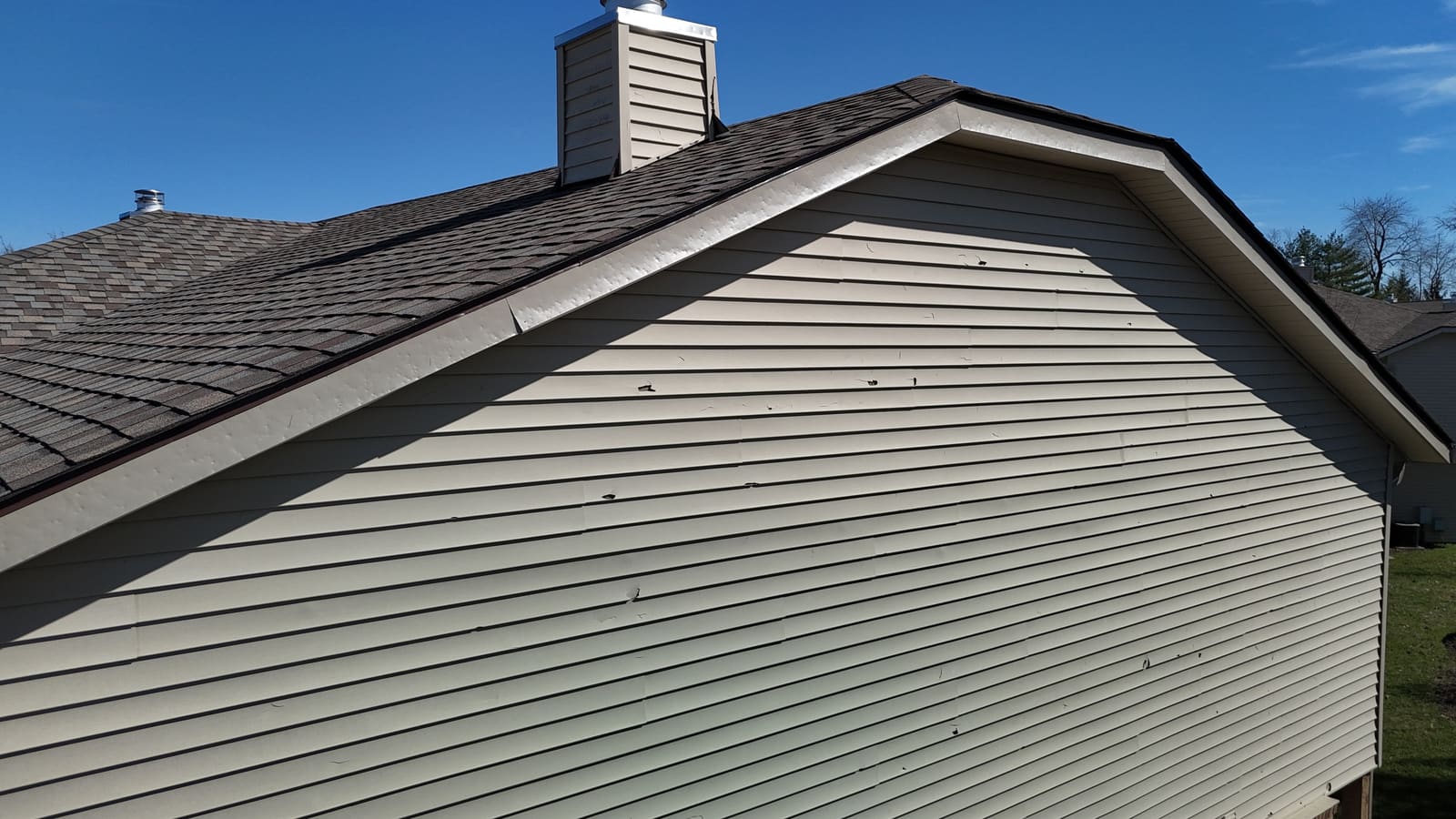
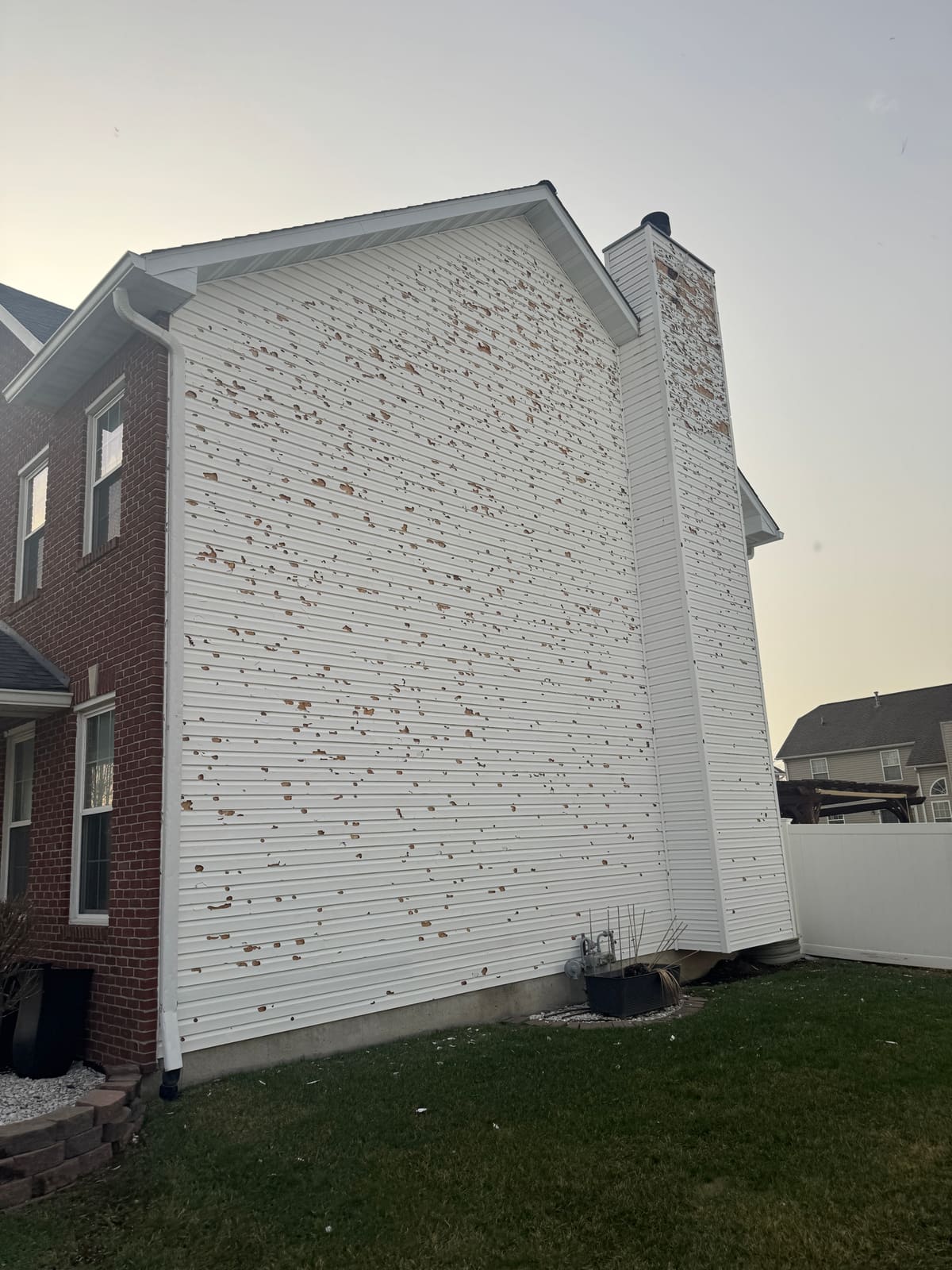
A hail impact bruises a shingle much like an apple: it leaves a divot and knocks off granules, exposing the asphalt to sunlight that breaks it down faster. Larger hail can crack the shingle's mat and let water in. Gutters, vents, siding and screens are often damaged too, so we inspect the whole exterior after a storm.
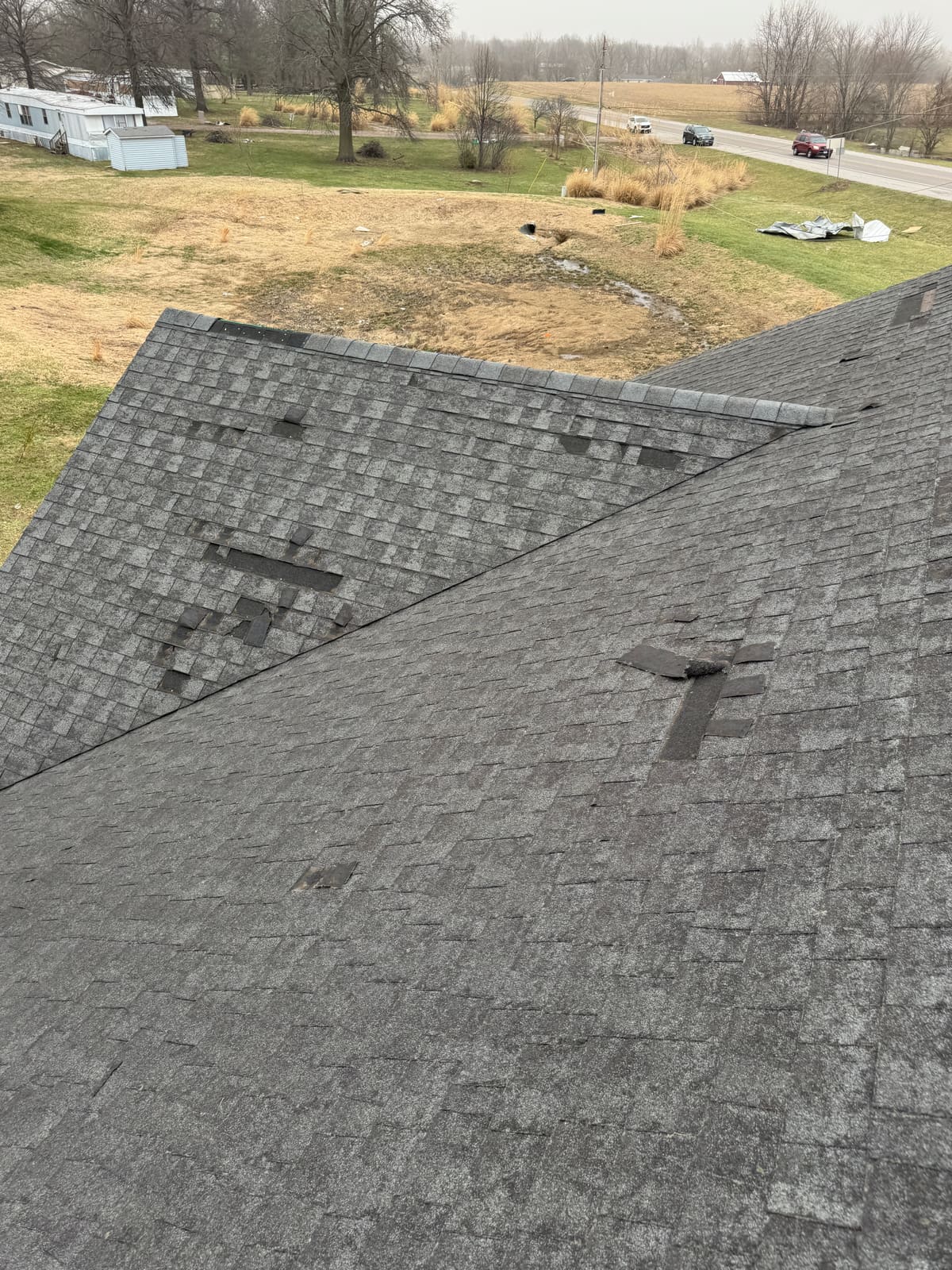
Wind damage is harder to spot and can be more dangerous for a roof. Strong winds lift shingles and break their seals, then set them back down looking normal. The next storm can lift them again and let water in, so wind damage needs a careful check of the whole roofing system. On siding, wind usually tears panels off the house entirely, which is easier to see and typically means replacement.
Schedule an inspection before filing a claim
Many homeowners call their insurance agent first. An agent will usually refer you to the claims department, and neither can tell you whether your damage warrants a claim.
Storm damage can look worse from the ground than it is. The hail may have been small, or the damage may be limited to debris. If an adjuster finds the damage insufficient, the claim is denied. A local contractor experienced with storm damage can inspect your roof first and tell you whether to file a claim, schedule a repair, or do nothing at all.
How it works
How a storm claim works
The smoothest restorations follow the same order. Here is the whole process, start to finish.
Inspection
We inspect your property and document the damage. If we find enough damage for a claim, we recommend filing one; if not, we tell you that too.
You file the claim
You file a claim with your insurance company, which assigns an adjuster and schedules a visit to your home.
The adjuster’s visit
We meet the adjuster on site and help document the damage we found. The adjuster may ask you a few questions about the day of the storm; beyond that, there is little you need to do.
Estimate and contract
The adjuster shares their findings and estimate with you, usually with an initial payment. We review the estimate with you, agree on the scope of work, and sign a contract.
Restoration
We complete the contracted work. If anything was missed or code requires additional work, our supplement team submits documentation to your insurance company.
Final payment and warranties
When the work is complete, we notify your insurance company, which releases the final payment to you. We settle the contract, and your warranties take effect.
Filing a claim
How to file your claim
Know the date and type of damage
Your insurance company will ask when the storm happened and whether the damage came from hail, wind or both.
Contact your insurer’s claims department
Call the claims number on your policy or file online. If we have inspected your home, you can tell them a local contractor inspected it and documented storm damage.
Keep receipts for emergency repairs
Save the invoices and receipts for tarping, boarding up or any other emergency work. Your adjuster will ask for them.
Note your claim number and appointment
Your insurance company will contact you to schedule the adjuster’s visit. Write down the claim number and the date and time, and let us know so we can be there to show the damage we documented.
How we help with your claim
H&F does not file, adjust or negotiate your claim, and we do not represent you with your insurance company. Those decisions remain between you and your insurer. What we do is meet with your adjuster to show the damage, provide our estimate and photos, and guide you through each step.

During your claim
What to expect along the way
Supplemental estimates
If additional damage is found after the adjuster’s visit, such as damaged gutters, we submit a supplemental estimate with photos and documentation. We prepare our estimates in Xactimate, the software most insurance companies use.
Code requirements
Codes vary by city. Where code requires ice and water shield and your policy covers code upgrades, insurance generally pays for it once it is installed, and we document the work with photos and costs.
Recoverable depreciation
Insurance typically pays an actual cash value payment first, then recoverable depreciation once the work is complete. We provide the completion documentation your insurer requires, such as photos or a certificate of completion.
Your deductible
You are responsible for your deductible. Illinois and Missouri law prohibit contractors from paying, waiving or discounting it, so be cautious of any contractor who offers to.
If your claim is denied or comes in low
Storm damage claims are complex, and adjusters can reach different conclusions about the same roof. If your claim is denied, we recommend asking your insurance company for a second inspection, and we can be there to show the damage we documented.
If the payment comes in lower than the work requires, our in-house supplement team submits supplemental estimates and documentation to your insurance company for anything that was missed.
What insurance doesn’t cover
Homeowners policies generally cover sudden and accidental damage, such as a hailstorm that leaves a roof no longer serviceable. They do not typically cover damage that develops over time.
Rotted decking is a common example. It results from long-term moisture, not a single storm, so it is not covered even when it is found during a storm-related replacement. We discuss this possibility and its cost before work begins, so there are no surprises.
Choosing a local contractor
After a major hailstorm, out-of-state crews often arrive promising fast work and full insurance coverage. Some do acceptable work, but many offer what we call a taillight warranty: it lasts only as long as you can see their taillights leaving. If a problem appears months later, they may no longer be reachable.
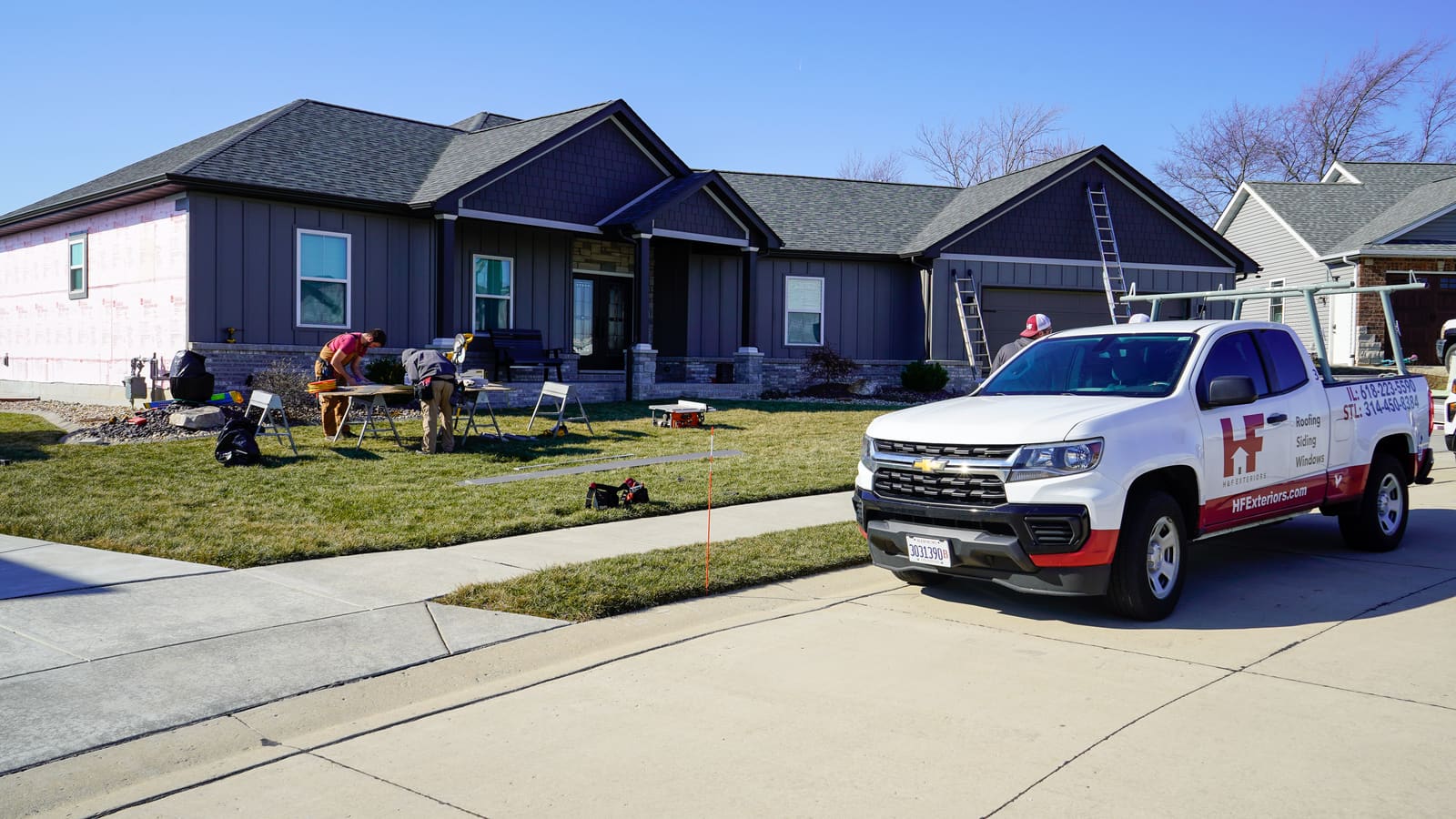
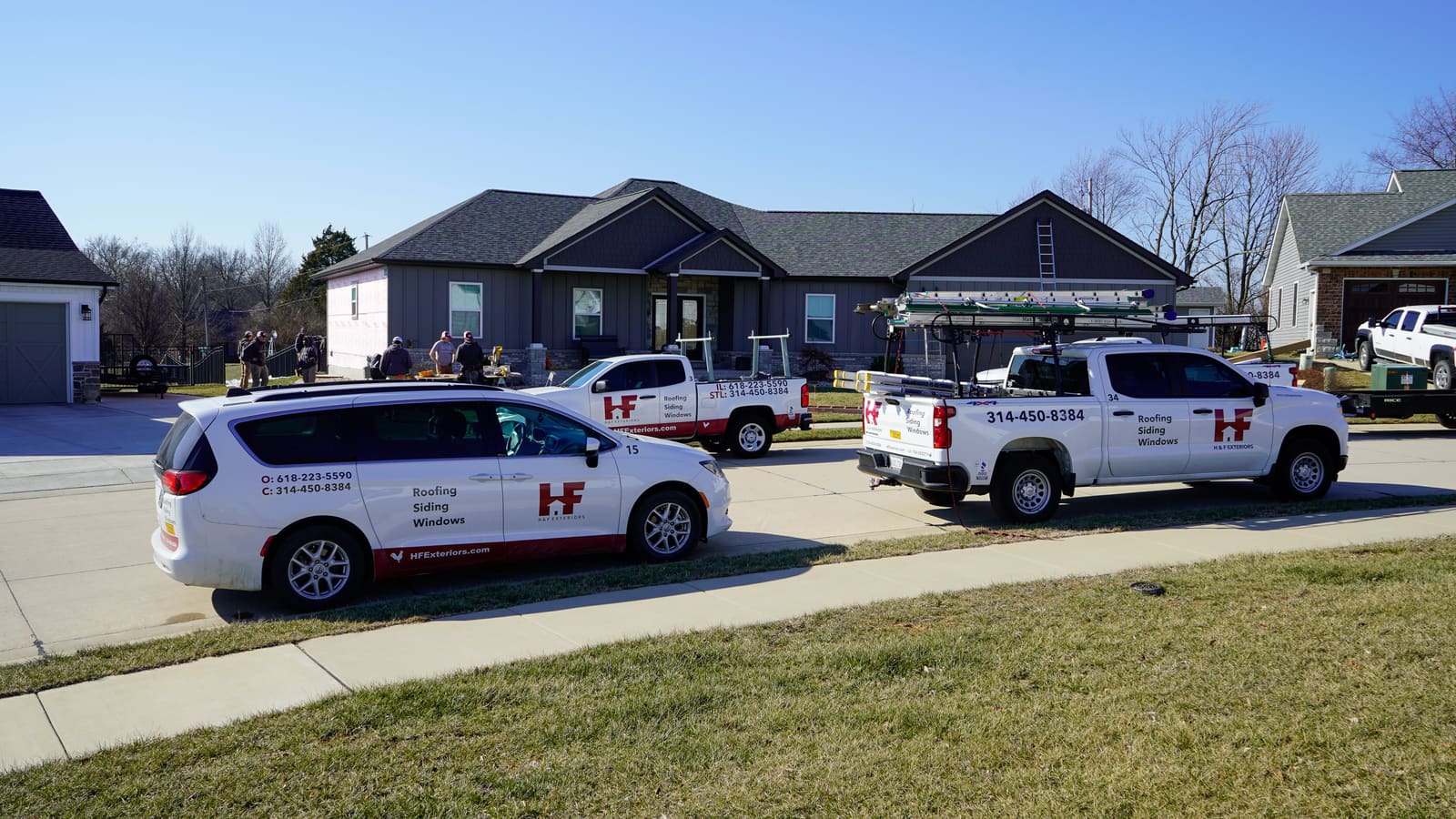
St. Louis has many reputable local contractors, and we encourage you to choose one of them. Local contractors understand area building codes and the homes in your neighborhood, and they will be here when you need them.
Reviews
★★★★★
900+ reviews
on Google, across the St. Louis area
Storm damage questions
Can I see hail damage from the ground?
Usually not. Hail damage is easiest to identify up close by someone who knows what to look for.
Should I call my insurance agent first?
You can, but it is not necessary. Have a local contractor inspect first, then contact your insurer’s claims department directly if the damage warrants a claim.
Does insurance pay for an emergency tarp?
Emergency tarping is often covered by homeowners policies. We give you an invoice you can submit to your insurance company with your claim.
Will filing a claim raise my rates?
Insurance rates depend on many factors, and claim history can be one of them. We cannot predict whether a claim will affect your rates. Your insurance agent is the best person to ask.
Do I still pay my deductible?
Yes. Illinois and Missouri law prohibit contractors from paying or waiving it.
What is recoverable depreciation?
Insurers usually pay a roof claim in two parts: the actual cash value first, then the recoverable depreciation after the work is complete and they receive the final invoice.
Free storm damage inspection
Pick a time online or call. We inspect, document the damage and tell you whether a claim makes sense before you call your insurance company.
4.9900+ reviewsNo interest if paid in full within 18 months¹